If you’re planning a high-end kitchen or joinery project in the next year, the material question worth resolving before the quote arrives is not which finish looks best. It is which finish still looks like itself in five years. Duco cupboards photograph beautifully. Five years in, they start to chip and scratch, and a patch repair never quite matches the original manufacturer’s finish.
The alternative isn’t compromise. It is a layered specification: engineered panels that resist wear where fingers reach, real timber veneers where the finish shows, and textured plaster on the walls that carry the room’s character. Choosing well the first time is more expensive on the quote. It is cheaper on the ten-year view.
"Duco cupboards look beautiful. But within five years, they start to chip and scratch. If you want to patch it up, it'll never look the same as the initial manufacturer."
Scarlett Begot
The interior finishes that look luxurious but fail first
The material Scarlett names most often as the visible failure case in high-end residential joinery is Duco. It photographs as luxury on install day: spray-lacquered, uniform, expensive-looking. What Duco cannot do is survive daily contact without deterioration. The finish chips at edges, scratches under everyday use, and the moment a repair is needed, the mismatch between the original and the patch becomes another visual problem in the room.
This isn’t a supplier issue or a workmanship issue. It’s what happens when a finish designed for a certain kind of surface is asked to perform on a surface it was never engineered for. A cupboard door in a kitchen is not a display panel. It’s a working part of the room. Specifying it for its opening-day appearance without specifying for its five-year appearance is the mistake.
“Durability is one of the most important factors to consider when picking materials,” Scarlett explains. “Because the client wants longevity. They don’t want something that’s going to deteriorate within five years.”
How to choose interior finishes for daily use
The selection question the studio asks first is not what the material looks like, but how it will behave once the space is being used. The joiner installs cabinetry where a family will open the same drawer three times a day. The wall finish sits behind a sofa that will move against it. The floor takes wet feet, prams, and the weight of daily furniture rearrangement.
The material has to accommodate that.
For Scarlett, that changes the order of the specification conversation. Appearance is still specified, but it is specified last. Performance is specified first, then a solution is chosen that delivers the appearance the client wanted within the performance constraint.
The client sees the finish they signed off on. What they don’t see is the layered decision underneath.
The natural materials interior design uses for longevity
The layered approach the studio has moved toward on high-end joinery uses engineered panels on the surfaces that receive daily wear, and real timber veneers on the surfaces that carry the visual character.
“We’ve got these new range of products, egger panels,” Scarlett explains. “They look like timber, or they look like metal. But they’ve got a durability aspect to them that works really well. So we use that inside of cupboards. They don’t scratch. And then we can match proper veneers to the inside if we choose a timber look offering you your luxurious aspect.”
The logic is neither aesthetic compromise nor material substitution. Engineered panels behave like the working surface they need to be. Timber veneers behave like the visible surface they need to be. Together, the specification protects both what the client sees and what they use.
Textured plaster is the wall material Scarlett has been specifying more heavily. “Textured plasters within spaces add such a different dynamic,” she says. “It’s not a wallpaper. There are so many different motifs and patterns we can apply to different interiors, and it can be different colours.” Unlike wallpaper, textured plaster carries no seams to lift, no paper to warp, and no repeat-print artificiality. It ages by weathering, not by failing.
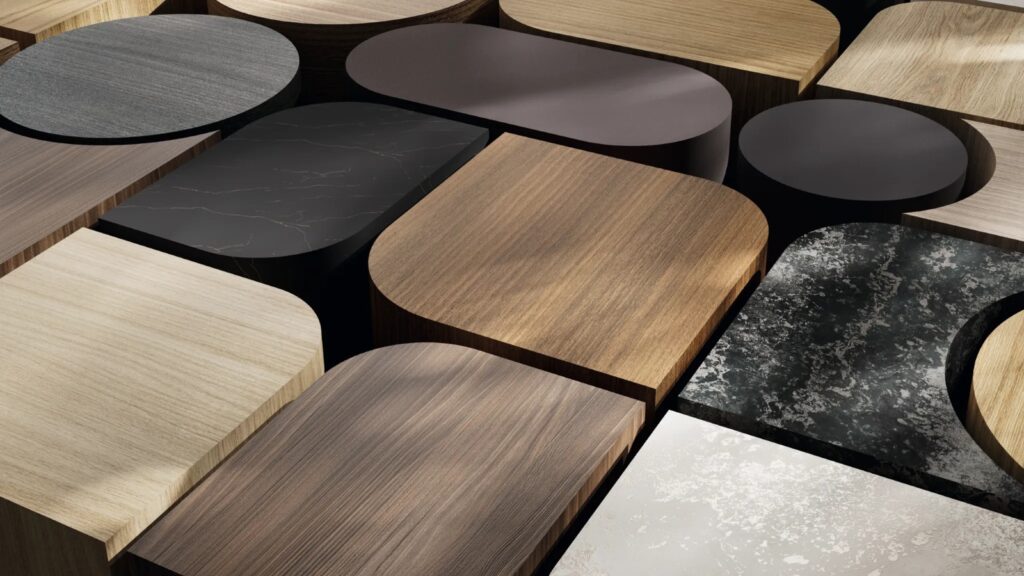
Durable materials for luxury interiors: What TERRA specifies
There is a wider point about what “luxury” means when applied to material selection. In a market that rewards the first photograph, luxury has been progressively defined as the finish that presents best on handover. In a residence that will be lived in for a decade or two, luxury is more usefully defined as the finish that still reads as considered when the family has been through it.
The interior design market makes both definitions available. Duco is one answer to luxury. Engineered panels layered with real veneers are another. The projects that get referred and photographed years later, without needing to be re-shot with fresh cabinetry, tend to be the second.
Why material selection in interior design is a long-range decision
The signature that separates a considered interior from a photogenic one is time. A photogenic interior looks right on the day it’s photographed. A considered interior still reads right on the day it’s photographed again, five or ten years later, without needing the finishes to be replaced.
That difference is decided in the specification meeting, not the styling shoot. The samples on the table each represent a decade of daily use. The client is being asked to commit to how a surface will age, how it will patina, and how it will sit alongside every other material choice in the room, long before they will see the finished result.
"Materiality is not an aesthetic choice. It is a ten-year decision made in a meeting that takes an hour."
Scarlett Begot
The discipline is choosing the material for the ten-year view. Not the trend. Not the photograph. The view.
A kitchen where the joinery still closes cleanly, the veneer’s grain still shows, and the plaster’s texture has softened rather than lifted. That is what material honesty looks like at year ten.
If you are evaluating a studio for your project, the question worth asking is what they would specify in your kitchen for the ten-year view, and whether they can name the specific material they would avoid. A clear answer, with named materials, is a strong signal. A vague answer is a signal too.
Frequently Asked Interior Design Questions
What interior design materials should I avoid in a high-end kitchen?
Duco is the finish that most often disappoints within five years. It looks luxurious on install day but chips and scratches under daily use, and patch repairs rarely match the original manufacturer’s finish. Consider engineered panels layered with timber veneers for surfaces that receive daily contact.
How do you choose interior finishes that will last?
Choose for daily performance first, then within that constraint, choose for appearance. The mistake most clients make is inverting the order: they choose the material that looks best in the sample, then discover its performance limits after install. A luxury interior is defined by how it ages, not how it photographs on handover.
What natural materials should interior designers specify for durability?
Real timber veneers on visible surfaces, engineered panels on high-wear surfaces, and textured plaster for wall finishes. The layered approach protects both the visible luxury and the daily working performance of the space.
Why specify textured plaster over wallpaper in luxury interiors?
Textured plaster carries no seams to lift, no paper to warp, and no repeat-print artificiality. It can carry many different motifs and patterns, and it can be tinted to any colour. Where wallpaper degrades over time, textured plaster ages by weathering, which is a very different visual outcome.