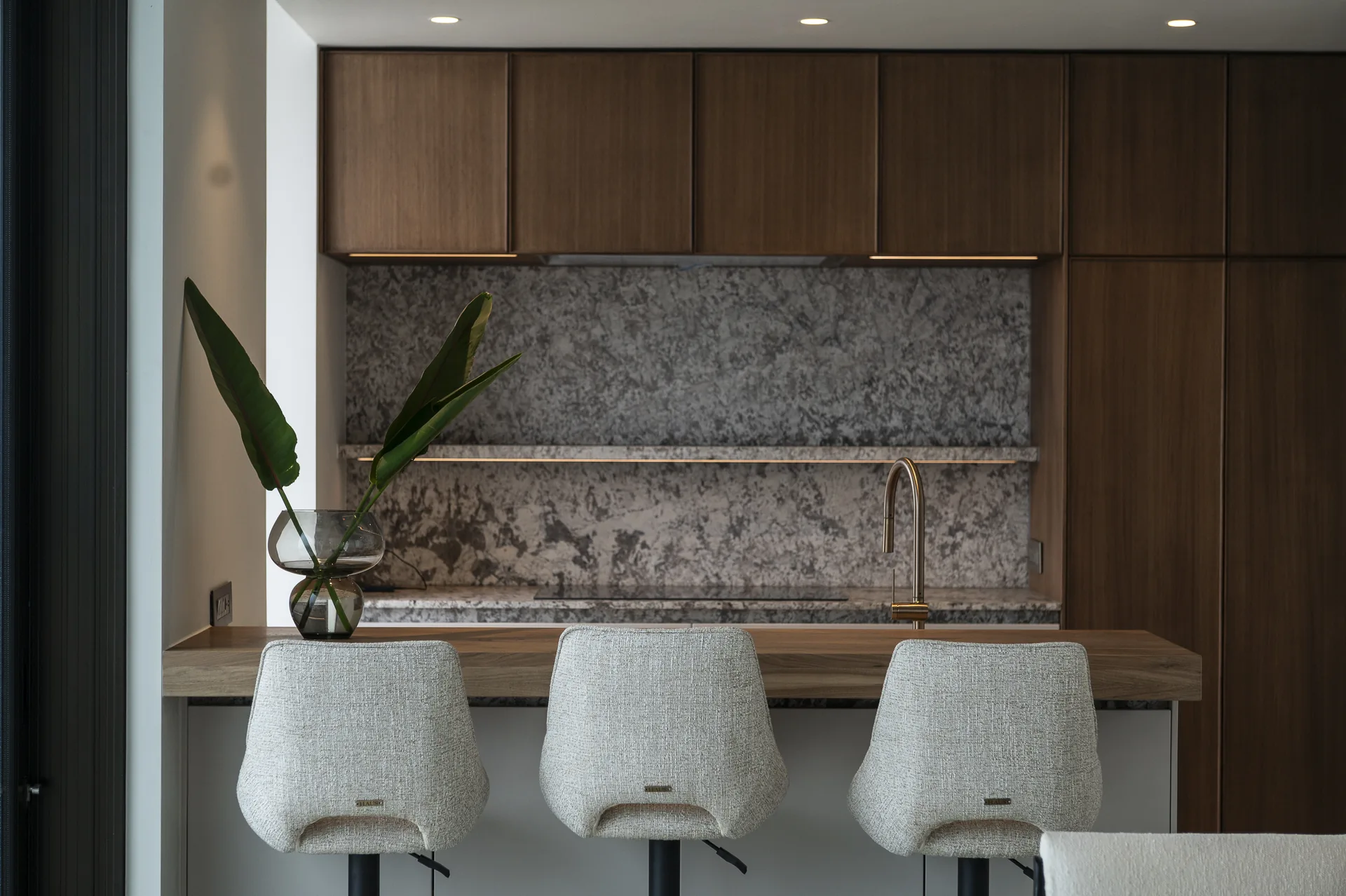
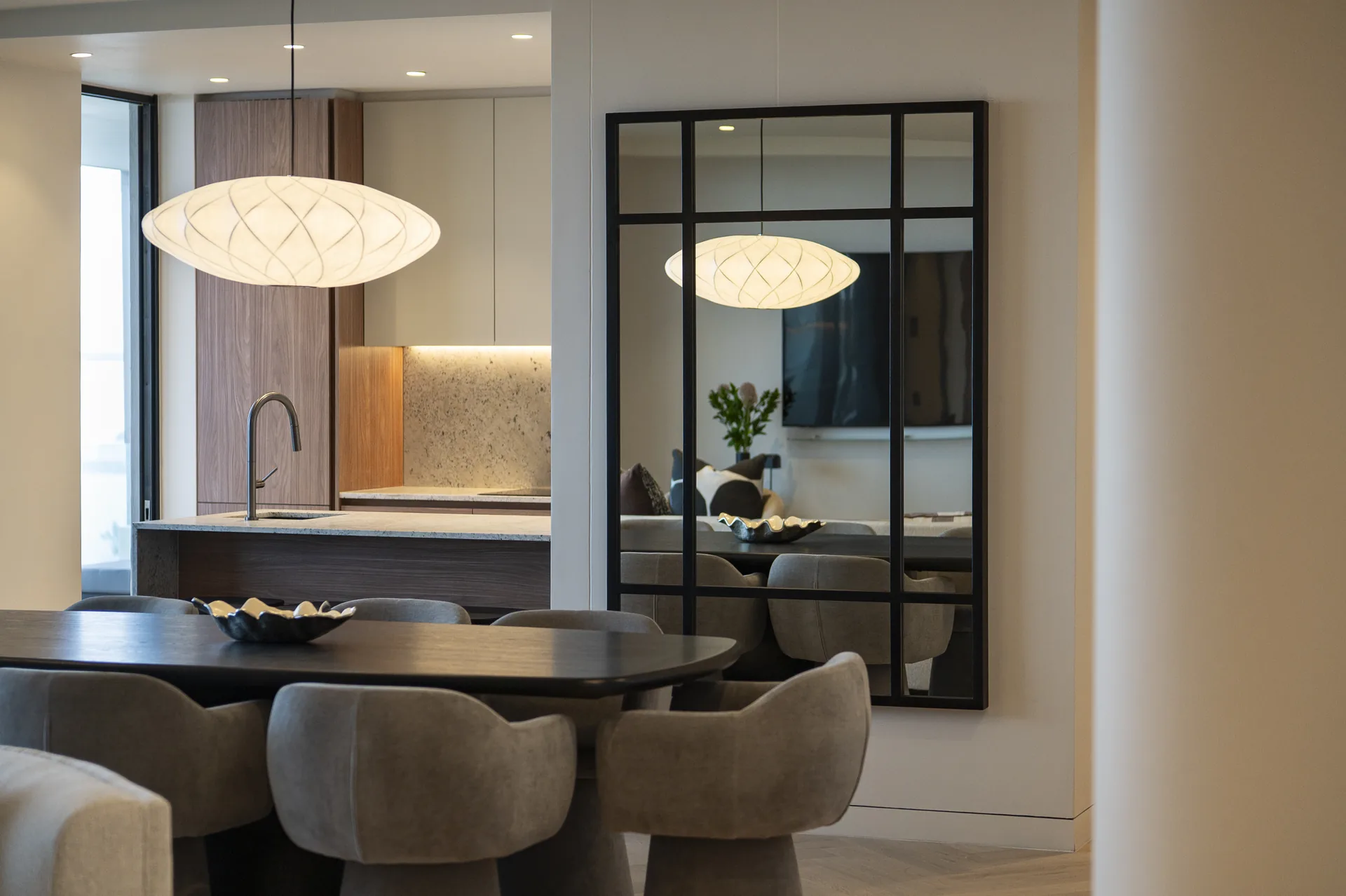
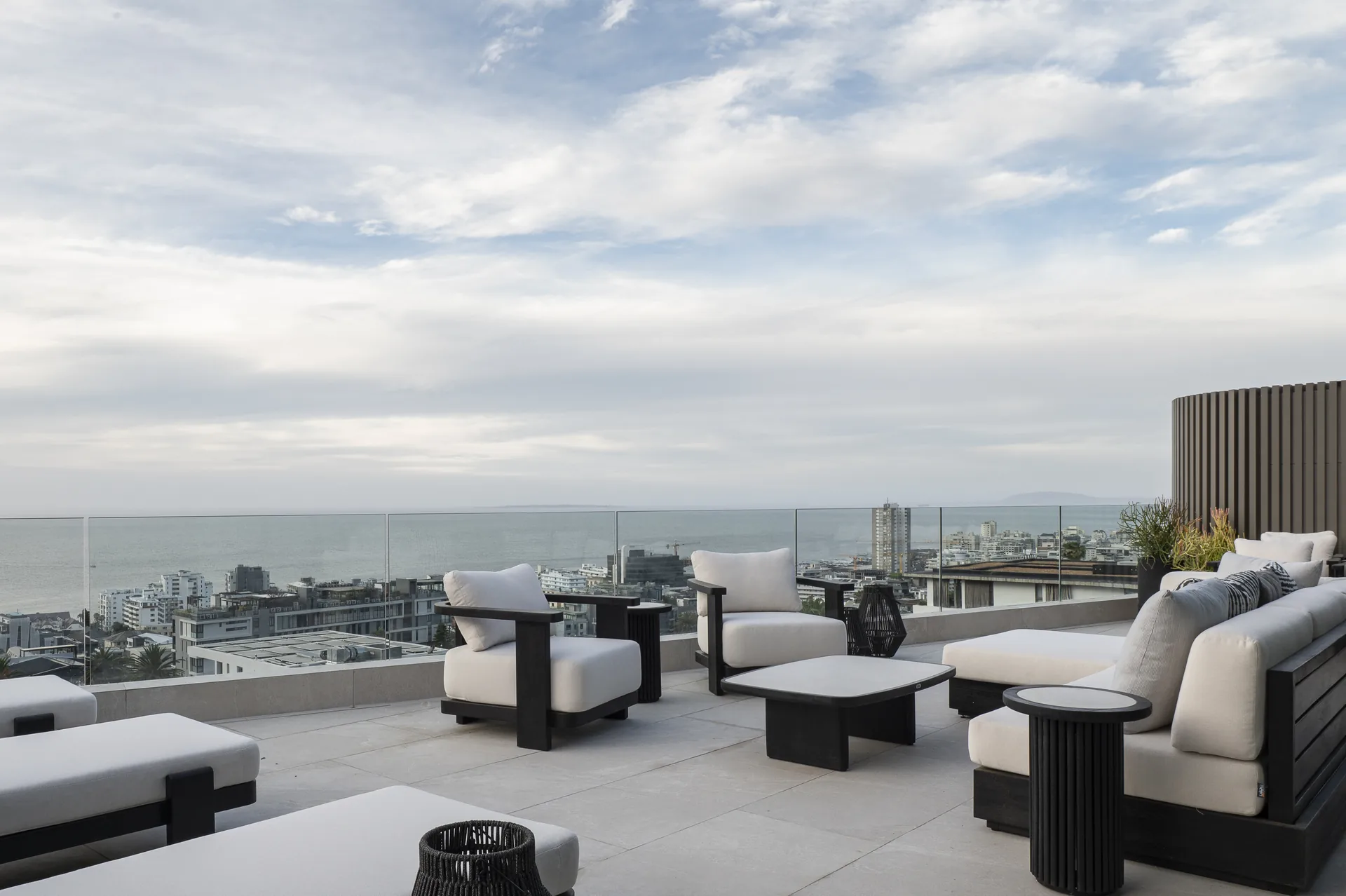
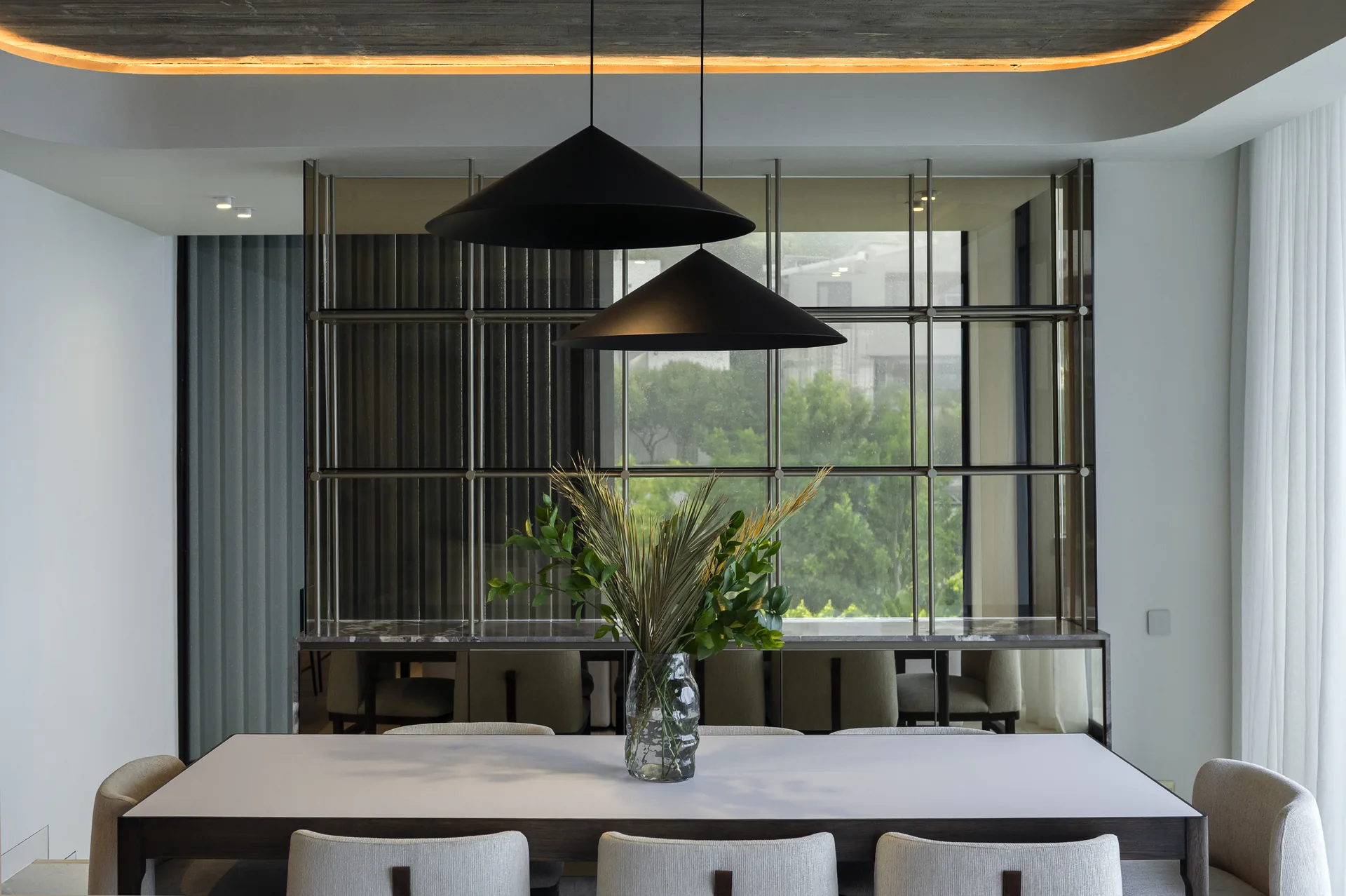
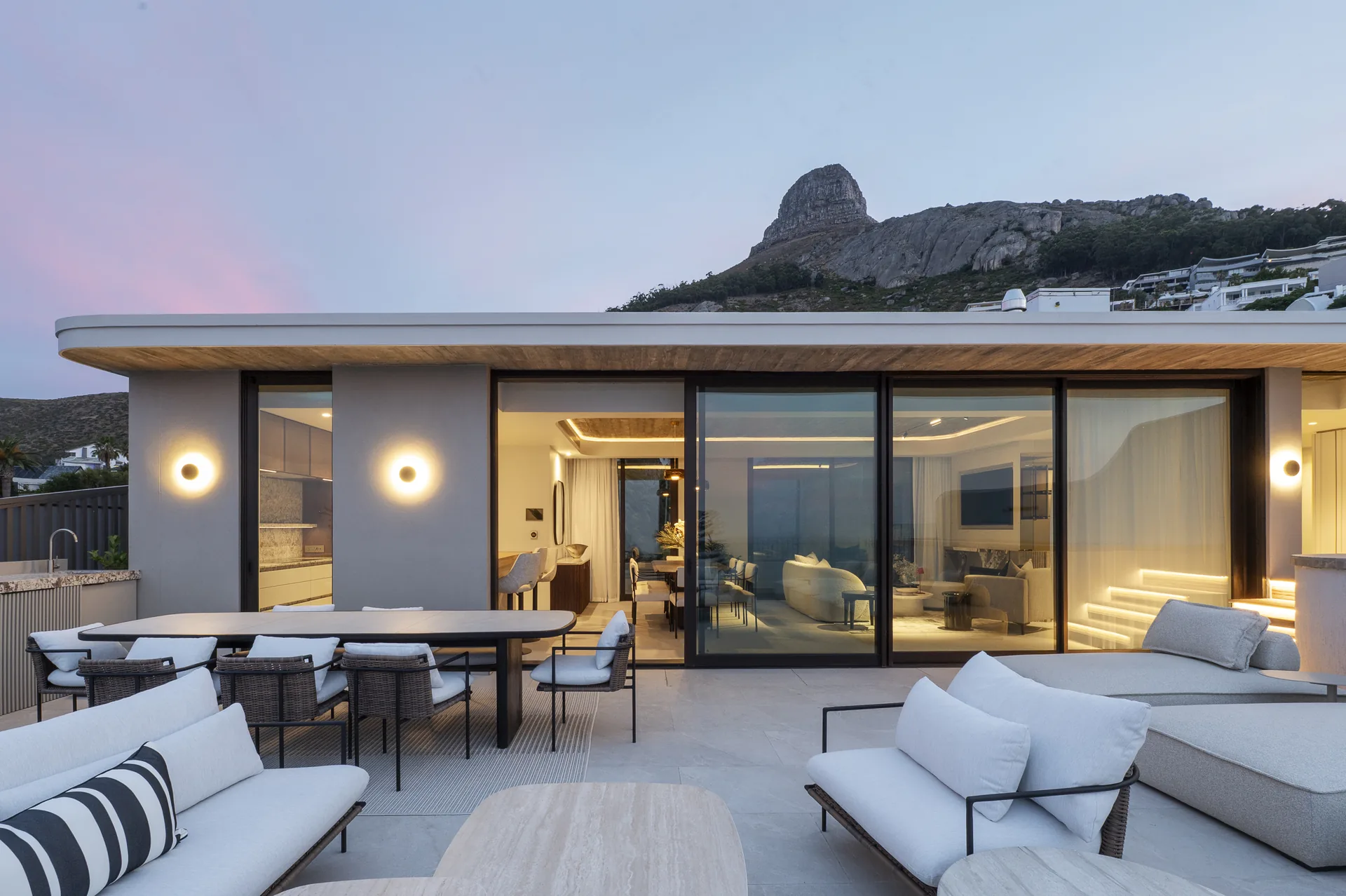
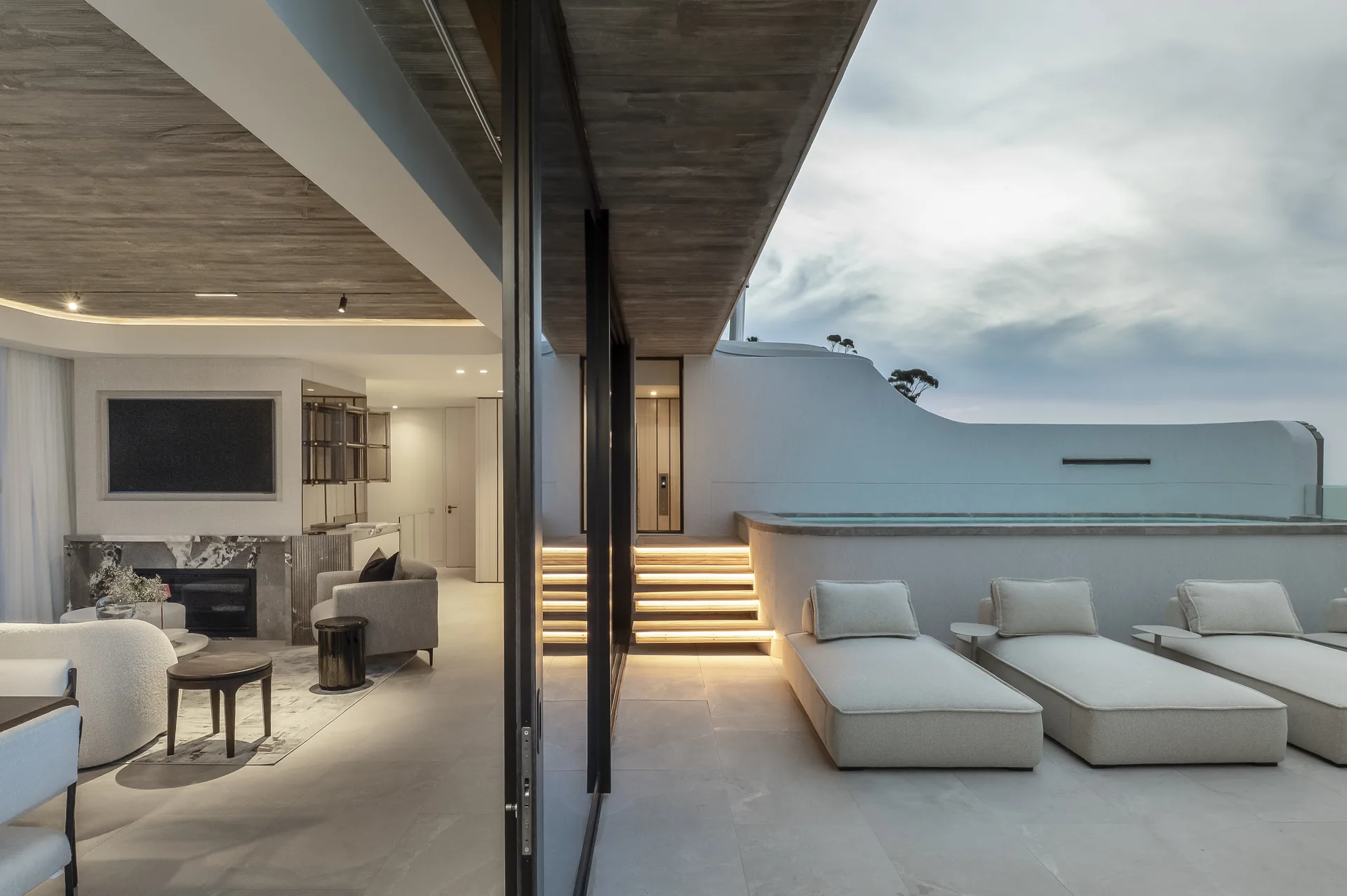
In most residential developments, furniture arrives late and is chosen quickly to photograph well at launch. At 46 Ave Le Sueur it was treated as the opposite, a continuation of the same intent that shaped the architecture and the interiors before it. The Gallery Group commissioned Terra Interior Design Studio to develop the furniture packages for three show units, 201, 202 and 401, and director Nicole Currer set an unusually demanding brief for the luxury market: no two units would share an identity.
That decision ran against the economics of development, where a single repeated scheme is cheaper to specify, order and install. Currer went the other way, beginning each unit from its own conceptual direction, because every buyer at this level arrives with an identity already formed. A home should recognise them rather than ask them to adjust.
The discipline underneath the work is sequence. Function is resolved first and aesthetics second, with every element chosen down to the last cushion to work before it is allowed to be beautiful. The pieces were curated rather than ordered, drawn from local makers chosen for workmanship and fine detail, with upholstery embellishments rarely found in a fitted-out luxury apartment. The Gallery Group identity was threaded through the smallest elements, from engraved tiles to the logo on the guest towels. There is no hero piece, by design.
Location:
Bantry Bay, Cape Town
The concept
Furniture is usually the last decision in a development and the first thing to give it away. At 46 Ave Le Sueur it was treated as the opposite, a continuation of the same intent that shaped the architecture and the interiors before it. Each show unit began from its own conceptual direction rather than a repeated scheme, because no two buyers arrive with the same identity. Function was settled before the eye was given an opinion, so the furniture reads as considered rather than installed, and resolved rather than assembled.